Epithelial cytokines and the inflammatory cascade

Epithelial cytokines play upstream and downstream roles in regulating immune responses in asthma.1,2

Epithelial cytokines play upstream and downstream roles in regulating immune responses in asthma1,2

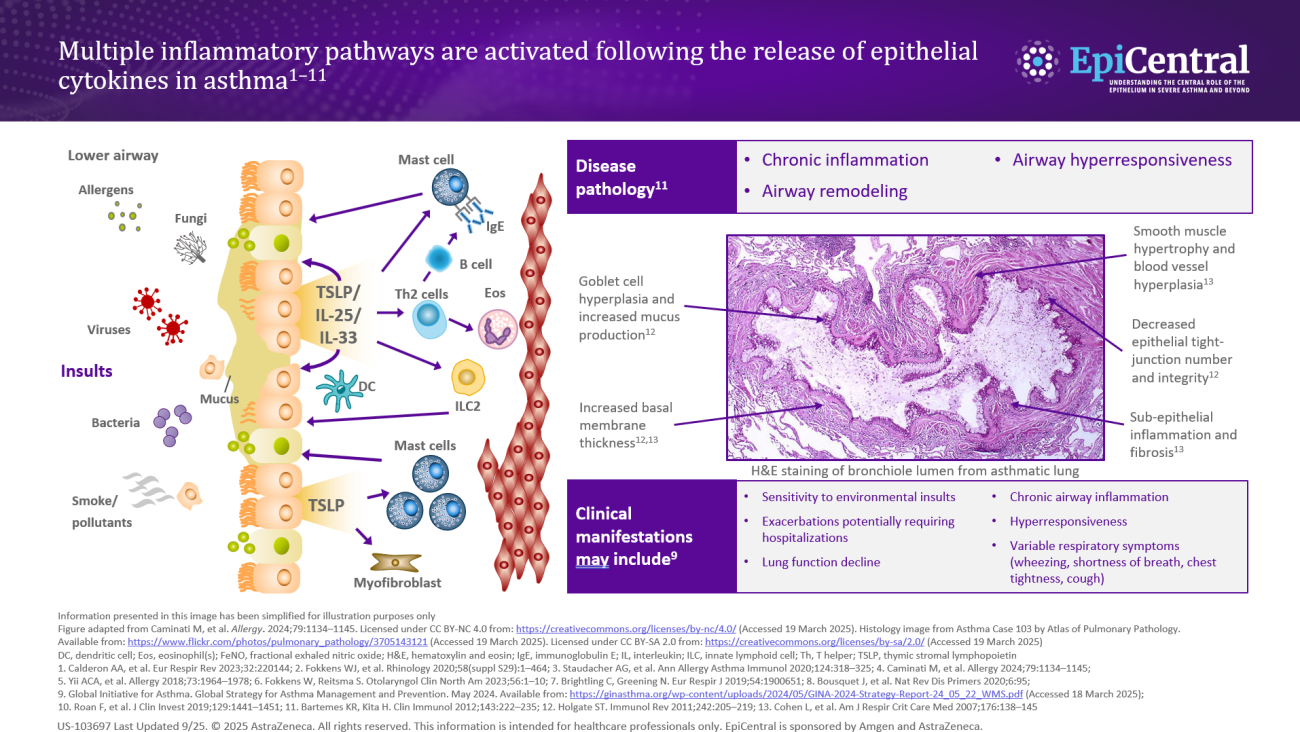
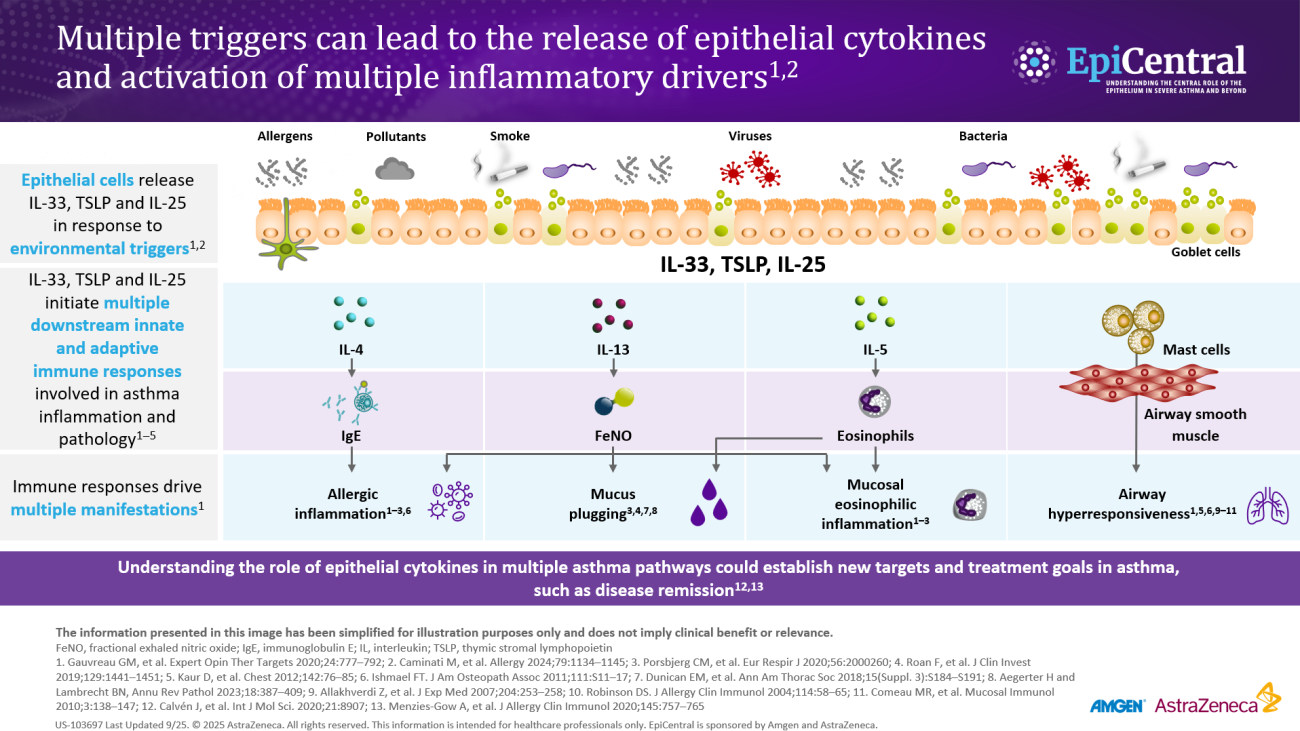
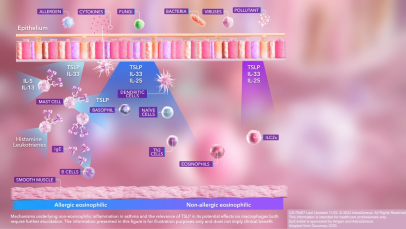
  • Epithelial activation triggers the release of the epithelial cytokines thymic stromal lymphopoietin (TSLP), interleukin (IL)-33, and IL-25, initiating and amplifying a cascade of complex pathways that together drive the clinical features of epithelial-driven diseases, such as asthma1–5
  • Once released from the epithelium, epithelial cytokines can activate and/or modulate innate and adaptive immune responses in overlapping but distinct ways1,2
  • Epithelial cytokines are involved in both allergic and/or eosinophilic (type 2 [T2]) inflammation and non-T2 inflammation, as well as epithelial structural changes and tissue remodeling5–10
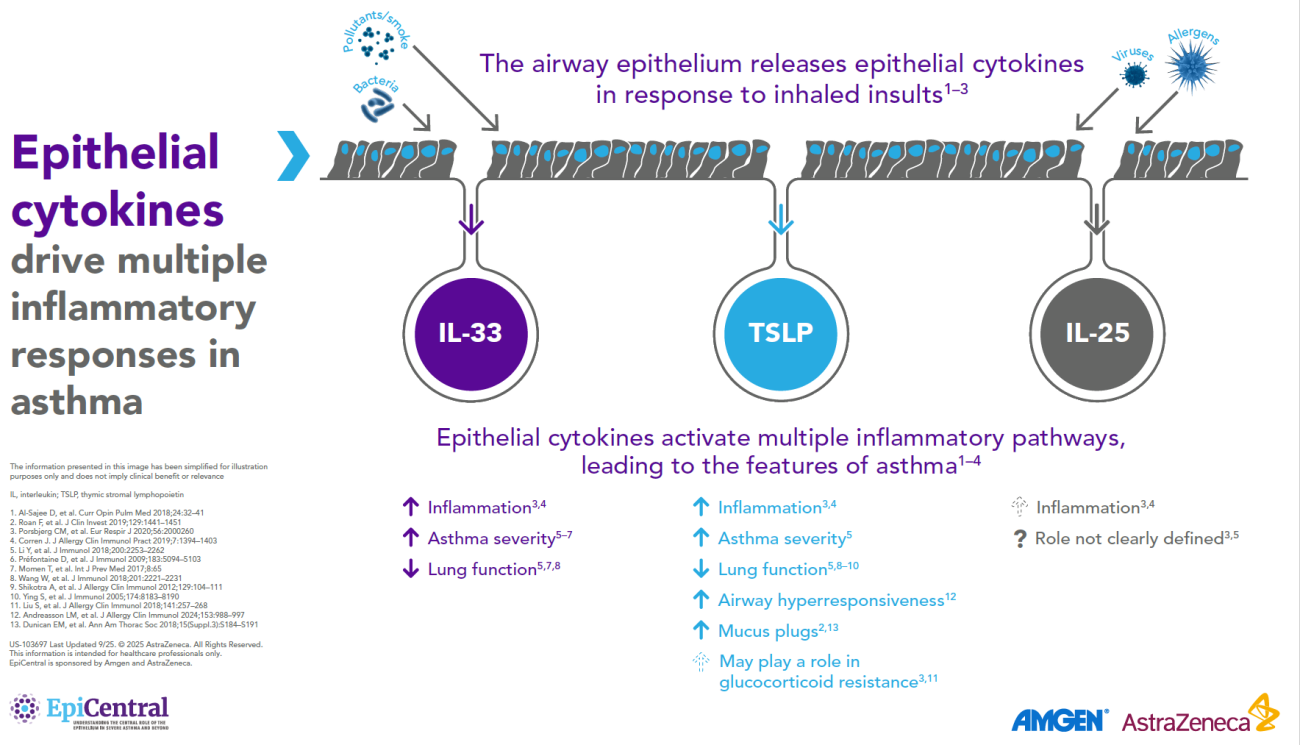
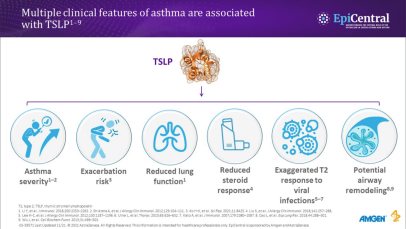
  • Multiple clinical features of asthma are associated with increased expression of TSLP, IL-33, and IL-25, including asthma severity, risk of exacerbations, reduced lung function, reduced glucocorticoid response, exaggerated T2 response to viral infections and those potentially associated with airway remodeling8–20

Further understanding of the role of epithelial cytokines in the inflammatory cascade in airway disease may provide greater insights into asthma pathophysiology and possible intervention options, with the aim of lowering disease activity by reducing epithelial-driven inflammation and restoring epithelial health21,22

References
1. Roan F, et al. J Clin Invest. 2019;129:1441–1451; 2. Bartemes KR, Kita H. Clin Immunol. 2012;143:222–235; 3. McBrien CN, Menzies-Gow A. Front Med (Lausanne). 2017;4:93; 4. Varricchi G, et al. Front Immunol. 2018;9:1595; 5. Gauvreau GM, et al. Expert Opin Ther Targets. 2020;24:777–792; 6. Brusselle GG, et al. Nat Med. 2013;19:977–979; 7. Lambrecht BN, Hammad H. Nat Immunol. 2015;16:45–56; 8. Kaur D, et al. Chest. 2012;142:76–85; 9. Wu J, et al. Cell Biochem Funct. 2013;31:496–503; 10. Guo Z, et al. J Asthma. 2014;51:863–869; 11. Kato A, et al. J Immunol. 2007;179:1080–1087; 12. Beale J, et al. Sci Transl Med. 2014;6:256ra134; 13. Shikotra A, et al. J Allergy Clin Immunol. 2012;129:104–111.e1-9; 14. Li Y, et al. J Immunol. 2018;200:2253–2262; 15. Ko H-K, et al. Sci Rep. 2021;11:8425; 16. Liu S, et al. J Allergy Clin Immunol. 2018;141:257–268.e6; 17. Lee H-C, et al. J Allergy Clin Immunol. 2012;130:1187–1196.e5; 18. Uller L, et al. Thorax. 2010;65:626–632; 19. Cao L, et al. Exp Lung Res. 2018;44:288–301; 20. Cheng D, et al. Am J Respir Crit Care Med. 2014;190:639–648; 21. Calvén J, et al. Int J Mol Sci. 2020;21:8907; 22. Duchesne M, et al. Front Immunol. 2022;13:975914.

Epithelial cytokines are rapidly released from the airway epithelium

The epithelium is a key component of the innate immune system. As described in the Role of the epithelium in asthma module, the epithelium provides a physical and immune-modulatory barrier acting as the first line of defense against environmental agents.1

Video: Watch Professor Gianni Marone discuss the importance of epithelial cytokines in T2- and ​beyond-T2 inflammation in severe asthma (03:06)​

Epithelial-derived cytokines (alarmins) are the body’s ubiquitous warning signals, acting as first reactors following infection and physical or immunological insult.2 Epithelial-derived cytokines (thymic stromal lymphopoietin [TSLP], interleukin [IL]-33, and IL-25) are released by activated epithelial cells in response to injury or immunological insult.3,4

The mechanism of epithelial-cytokine release differs from the production of traditional cytokines, which are secreted by a wide range of immune cells in response to inflammation and infection.5 In asthma, epithelial-derived cytokines, produced by both immune and non-immune cells, are released in response to a variety of triggers present at the airway epithelium, such as pathogens, cytokines, aeroallergens, mechanical injury, and air pollutants.3,6–8 TSLP, IL-33, and, to a lesser extent, IL-25 (also known as IL-17E), have a pleiotropic role in promoting the development of inflammation in patients with asthma by activating specific receptors on a variety of immune and non-immune cells.6 In particular, TSLP exerts its pleiotropic functions by binding to a high-affinity heteromeric complex composed of a thymic stromal lymphopoietin receptor (TSLPR) chain and IL-7R⍺.8

The inflammatory cascade in asthma: role of epithelial cytokines 

Once released from the epithelium, epithelial cytokines can activate and/or modulate innate and adaptive immune responses in overlapping but distinct ways.6 The specificity of IL-33, TSLP, and IL-25 in the modulation of allergic inflammation is mediated by the selective expression of their different receptors on immune cells.6 While IL-33, TSLP, and IL-25 can play similar roles in T2 inflammation, their roles are more frequently divergent.9

Image
US EpiCentral_Module 4_epithelial cytokines orchestrate inflammation_hero asset

Epithelial cytokines cell interactions

Download resource

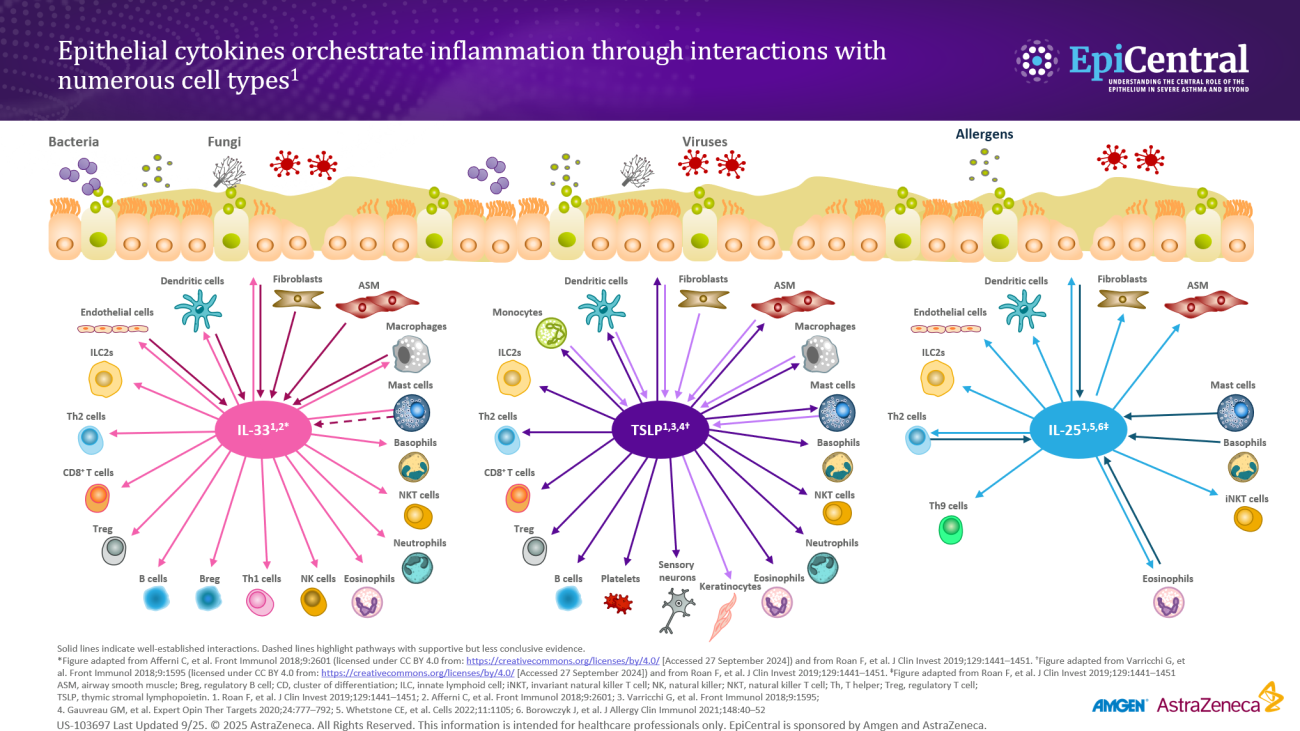
Several cellular targets of TSLP, IL-33 and, to a lesser extent, IL-25 have been identified, including immune and non-immune cells.6,8 The activation of these cellular targets by TSLP can cause production of several downstream cytokines (eg, IL-5, IL-13, and IL-4), leading to T2 and non-T2 allergic inflammation.4,6–8,10

TSLP, IL-33, and, to a lesser extent, IL-25 have a large number of cellular targets.6 IL-33 targets myeloid dendritic cells, CD4+ T cells, CD8+ T cells, regulatory T cells, natural killer T cells, mast cells, macrophages, B cells, eosinophils, basophils, neutrophils, type 2 innate lymphoid cells (ILC2s), airway epithelium, and fibroblasts.6 TSLP targets myeloid dendritic cells, CD4+ T cells, CD8+ T cells, regulatory T cells, natural killer T cells, B cells, mast cells, monocytes, eosinophils, basophils, ILC2s, and the airway epithelium.6 IL-25 targets ILC2s, CD4+ T cells, invariant natural killer T cells, airway epithelial cells, and fibroblasts.

Allergic eosinophilic (T2) inflammation, driven by allergen exposure, induces the release of epithelial cytokines (TSLP, IL-33 and IL-25), which can activate dendritic cells (DCs).4,10 Activated DCs present allergens to naïve CD4+ T cells, resulting in differentiation to T helper (Th)2 cells.4,10 Th2 cells, in collaboration with activated basophils, are a major source of IL-4, IL-5, and IL-13, which induce immunoglobulin (Ig)E class switching in B cells.4,10,11 These molecules activate eosinophils (predominantly driven by IL-5) and mast cells, which are the primary effector cells in allergic T2 inflammation.4,10,11

TSLP, IL-33 and IL-25 activate ILC2s, resulting in production of IL-5 and IL-13, which leads to activation of eosinophils and non-allergic eosinophilic T2 inflammation.4,10–14 

Beyond T2 inflammation, TSLP may also play a role in driving structural changes through activation of fibroblasts and mast cells.4,15 In particular, human CD34+ progenitor-derived mast cells express TSLPR and IL-7R⍺.16 TSLP, in combination with certain cytokines (eg, IL-1β and tumor necrosis factor [TNF]-⍺), causes the release of several cytokines and chemokines from mast cells.15–17 TSLP, in combination with IL-33, induces prostaglandin D2 (PGD2) production by human mast cells.18 TSLP is a survival factor for human mast cells through the activation of STAT6, providing one potential explanation for mast cell accumulation in allergic disorders.17 The structural changes mediated by mast cell and fibroblast activation ultimately lead to airway remodeling and airway hyperresponsiveness.4,19

Further evidence suggests that TSLP, IL-33, and IL-25 may play a pivotal role beyond T2 inflammation.9 TSLP provides critical signals for T follicular helper cell (TFH) differentiation,20 human B-cell proliferation,21 and mast cell activation.15 IL-33 augments the effects of rhinovirus on the inflammatory activity of human lung vascular endothelium, which may be relevant to viral-induced asthma exacerbations.22 Mast cells, in response to IL-33, release T2 cytokines, which induce upregulation of IL-33 expression by epithelial cells in a feed-forward loop, suggesting that mast cells cooperate with epithelial cells through IL-33 signaling.23 IL-33 may also potentiate the release of angiogenic and lymphangiogenic factors from human mast cells.24 IL-25, which belongs to the IL-17 cytokine family, exerts its biological effects by interacting with a dimeric complex consisting of the two receptor subunits IL-17R⍺ and IL-17RB.6 IL-25 exerts a pathogenic role in allergic asthma and virus-induced exacerbations.25

Professor Michael E. Wechsler describes the role of epithelial cytokines in the inflammatory asthma cascade.

Video: Watch Professor Michael E. Wechsler describe the burden of severe asthma and the spectrum of triggers, overlapping inflammatory pathways, and role of the epithelium that is associated with the complexity of severe asthma. (04:58)

Epithelial cytokines are associated with clinical features of asthma

Multiple clinical features of asthma are associated with increased expression of TSLP and/or IL-33, including:

  • Asthma severity26,27
  • Risk of asthma exacerbations28
  • Reduced lung function27
  • Reduced glucocorticoid response29
  • Exaggerated T2 response to viral infections30–32
  • Potential airway remodeling33–35
  • Airway hyperresponsiveness36
  • Mucus plugging6,37

Additionally, increased expression of IL-25 is associated with potential airway remodeling,38 and an exaggerated T2 response to viral infections.25 More recently, TL1A, a novel epithelial cytokine, has also been shown to contribute to airway inflammation and remodeling through its effect on immune and structural cells.39

Click here to learn more about the potential roles of TSLP, IL-33 and IL-25 in each of these clinical features.

Image
US EpiCentral_Module 4_Epithelial Cytokines and clinical features_hero asset

Multiple clinical features of asthma are associated with increased expression of TSLP, IL-33 and IL-25

Download resource

Find out more about the EpiCreator – Professor Gianni Marone.

RELATED RESOURCES

Like this page? We have a host of other resources available in the ‘Scientific and Resource Library’ where you can find out more.

References 

1. Holgate ST. Immunol Rev. 2011;242:205–219; 2. Yang D, et al. Immunol Rev. 2017;280:41–56; 3. Bartemes KR, Kita H. Clin Immunol. 2012;143:222–235; 4. Gauvreau GM, et al. Expert Opin Ther Targets. 2020;24:777–792; 5. Lacy P, Stow JL. Blood. 2011;118:9–18; 6. Roan F, et al. J Clin Invest. 2019;129:1441–1451; 7. McBrien CN, Menzies-Gow A. Front Med (Lausanne). 2017;4:93; 8. Varricchi G, et al. Front Immunol. 2018;9:1595; 9. Porsbjerg CM, et al. Eur Respir J. 2020;56:2000260; 10. Brusselle GG, et al. Nat Med. 2013;19:977–979; 11. Lambrecht BN, Hammad H. Nat Immunol. 2015;16:45–56; 12. Brusselle G, Bracke K. Ann Am Thorac Soc. 2014;11(Suppl 5):S322–S328; 13. Halim TY, et al. Immunity. 2012;36:451–463; 14. Martin NT, Martin MU. Nat Immunol. 2016;17:122–131; 15. Kaur D, et al. Chest. 2012;142:76–85; 16. Allakhverdi Z, et al. J Exp Med. 2007;204:253–258; 17. Han N-R, et al. J Invest Dermatol. 2014;134:2521–2530; 18. Buchheit KM, et al. J Allergy Clin Immunol. 2016;137:1566–1576.e5; 19. Ishmael FT. J Am Osteopath Assoc. 2011;111(11 Suppl 7): S11–S17; 20. Pattarini L, et al. J Exp Med. 2017;214:1529–1546; 21. Milford T-AM, et al. Eur J Immunol. 2016;46:2155–2161; 22. Gajewski A, et al. Allergy. 2021;76:2282–2285; 23. Altman MC, et al. J Clin Invest. 2019;129:4979–4991; 24. Cristinziano L, et al. Cells. 2021;10:145; 25. Beale J, et al. Sci Transl Med. 2014;6:256ra134; 26. Shikotra A, et al. J Allergy Clin Immunol. 2012;129:104–111.e1-9; 27. Li Y, et al. J Immunol. 2018;200:2253–2262; 28. Ko H-K, et al. Sci Rep. 2021;11:8425; 29. Liu S, et al. J Allergy Clin Immunol. 2018;141:257–268.e6; 30. Lee H-C, et al. J Allergy Clin Immunol. 2012;130:1187–1196.e5; 31. Uller L, et al. Thorax. 2010;65:626–632; 32. Kato A, et al. J Immunol. 2007;179:1080–1087; 33. Cao L, et al. Exp Lung Res. 2018;44:288–301; 34. Wu J, et al. Cell Biochem Funct. 2013;31:496–503; 35. Guo Z, et al. J Asthma. 2014;51:863–869; 36. Andreasson LM, et al. J Allergy Clin Immunol. 2024;153:988–997.e11; 37. Dunican EM, et al. Ann Am Thorac Soc. 2018;15(Suppl 3):S184–S191; 38. Cheng D, et al. Am J Respir Crit Care Med. 2014;190:639–648; 39. Varricchi G, et al. J Allergy Clin Immunol. 2025;155:1420–1434.